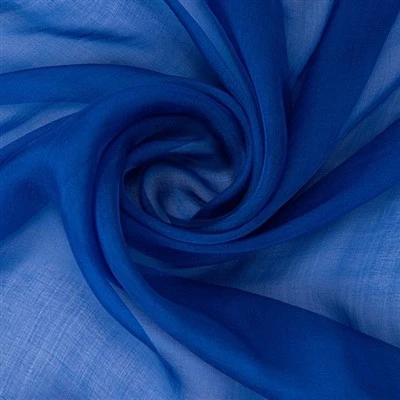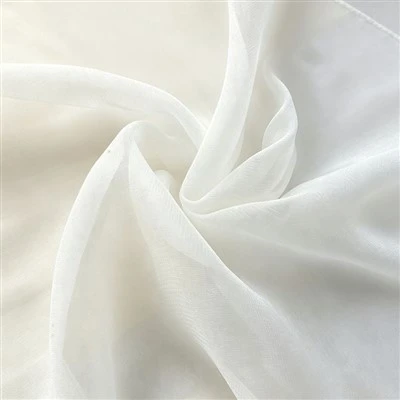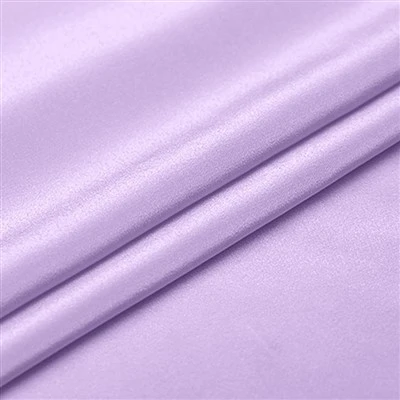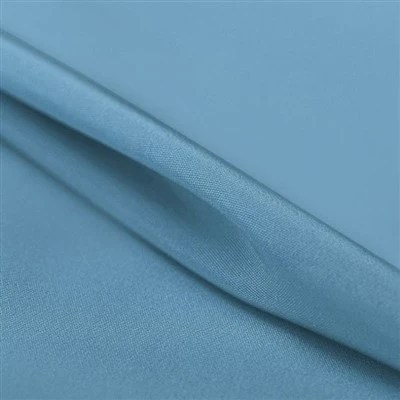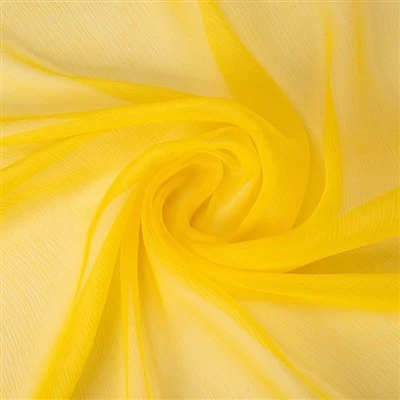

Acetate fiber is a filament fiber suitable for spinning and weaving, produced through a series of chemical processes using wood pulp cellulose-which shares the same chemical molecular composition as cotton fiber-and acetic anhydride as raw materials. While it utilizes cellulose as its structural backbone and exhibits the fundamental characteristics of cellulosic fibers, its properties differ from those of regenerated cellulosic fibers (such as viscose, cupro, and silk) and share certain traits with synthetic fibers:
1. Good thermoplasticity: Acetate fiber softens between 200°C and 230°C and melts at 260°C. This thermoplastic nature-similar to that of synthetic fibers-means that once plastic deformation occurs, the shape does not revert, resulting in permanent deformation. Fabrics made from acetate offer excellent formability, accentuating the body's curves while presenting an elegant and sophisticated overall appearance.
2. Excellent dyeability: Acetate fiber is typically dyed using disperse dyes; it exhibits superior color uptake and produces vibrant hues, outperforming other cellulosic fibers in this regard. Its thermoplastic properties (softening at 200°C–230°C and melting at 260°C) allow for permanent shaping, similar to synthetic fibers.
3. Appearance resembling mulberry silk: Acetate fiber mimics the luster and soft, smooth hand-feel of mulberry silk. With a specific gravity identical to that of silk, it offers a similar drape. Fabrics woven from acetate filament are easy to wash and quick-drying, resistant to mold and moths, and possess better elasticity than viscose fibers.
4. Properties close to mulberry silk: Compared to the physical and mechanical properties of viscose and mulberry silk, acetate fiber has lower strength and higher elongation at break. Although its wet-to-dry strength ratio is lower than that of silk, it remains higher than that of viscose filament. It features a low initial modulus and a moisture regain rate that falls between that of cellulosic fibers and synthetic fibers. Furthermore, metrics such as the wet-to-dry strength ratio, relative loop and knot strengths, and elastic recovery rate are comparable to those of mulberry silk. Consequently, among chemical fibers, acetate fiber has properties most similar to those of mulberry silk.
5. Acetate fabric is anti-static and resistant to attracting airborne dust. It is suitable for dry cleaning, wet washing, and machine or hand washing at temperatures below 40°C; this overcomes the drawbacks associated with silk and wool fabrics-which tend to harbor bacteria and dust while requiring exclusive dry cleaning-and eliminates the risk of moth damage common to wool. It is easy to care for and store, while offering the resilience and smooth, supple hand-feel characteristic of wool.
Other: Acetate fabric possesses various properties that match or even surpass those of cotton and linen, such as moisture absorption and breathability, resistance to sticking to the skin when sweating, ease of washing and drying, resistance to mold and moths, skin-friendly comfort, and absolute eco-friendliness.