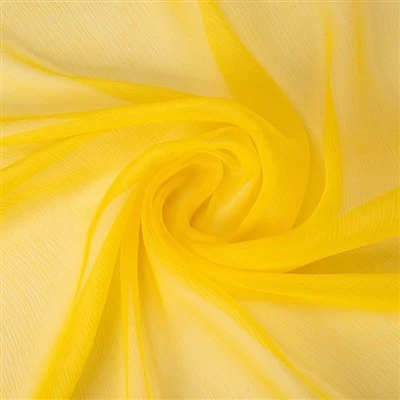

Product Code Identification: Domestically produced silk fabrics follow a standardized product coding system established by the China Silk Corporation. The code consists of five Arabic numerals; the first digit on the left indicates the fabric type: "1" for pure silk (including mulberry silk and spun silk), "2" for chemical fiber fabrics, "3" for blended fabrics, "4" for tussah silk fabrics, "5" for rayon fabrics, "6" for interwoven fabrics (including acetate), and "7" for quilt cover fabrics.
Identifying by Luster and Hand-feel: Pure silk fabrics exhibit an elegant, pearly luster and feel soft and fluid to the touch; chemical fiber fabrics have a bright, harsh sheen and feel stiff. While some imitation silk fabrics may feel soft, their surfaces appear dull and lack that characteristic pearly luster. Identifying silk: Determining whether a piece of fabric or a garment is made of pure silk, cotton, linen, wool, or man-made fiber usually relies on experience. Professionals who handle fabrics regularly-such as sales clerks and tailors-can often identify the material simply by sight and touch. However, there is now a vast array of synthetic fibers. Ultrafine and specially shaped filaments of nylon, polyester, and viscose can be used to create imitation silks that are remarkably convincing, making it difficult to distinguish the genuine article from the imitation based solely on sight and touch. Therefore, accurate conclusions require a comprehensive analysis using multiple methods, such as burn testing, microscopic examination, solubility testing, chemical staining, melting point analysis, and infrared spectroscopy. So, how can consumers-who lack access to professional testing equipment-distinguish genuine silk from imitations?
Visual and Tactile Inspection Method
(1) Visual inspection: Genuine silk fabric exhibits a soft, pearly luster, whereas chemical fiber fabrics have a luster that is harsh and glaring rather than soft.
(2) Fiber characteristics: Silk fibers are fine and long; cotton fibers are short; wool fibers are naturally crimped; chemical fibers are highly uniform.
(3) Tactile inspection: Silk feels soft to the touch and is smooth and comfortable against the skin.
Burning Test
(1) Silk emits an odor of burning feathers when ignited; it does not sustain combustion well and self-extinguishes. The ash is brittle, friable, fluffy, and black.
(2) Rayon (viscose fiber) emits an odor of burning paper mixed with a chemical scent. It burns very rapidly. Except for delustered varieties, it leaves virtually no ash, though small amounts of dark gray ash may occasionally remain.
(3) Nylon and polyester emit a very faint sweet odor; they do not sustain combustion directly or burn slowly. The ash forms hard, round beads.
(4) Cotton and linen both emit an odor of burning paper; the ash is soft and dark gray.
(5) Wool burns similarly to silk, though the two can be distinguished by visual inspection. Silk and Health: Since ancient times, silk has been hailed as the "Queen of Fabrics." In modern times, it has earned the titles of "healthy fiber" and "wellness fiber." Consequently, the health-promoting properties of silk fiber are unparalleled and irreplaceable. Silk fiber contains 18 amino acids essential to the human body-closely resembling the amino acid composition of human skin-earning it the nickname "humanity's second skin." Wearing silk clothing not only protects against UV radiation, harmful gases, and bacteria, but also boosts the vitality of skin cells and promotes metabolism; it also serves as a beneficial aid in treating certain skin conditions. Additionally, its unique moisture-absorbing and breathable qualities help regulate body temperature and moisture levels. Silk Care: Certain silk fabrics-such as brocade, *guxiang* satin, large-pattern soft satin, georgette velvet, gold-thread velvet, *zhang* velvet, *zhuanghua* satin, and gold-ground fabrics, as well as lightweight gauzes, fine silks (*xiao*), and yarn-dyed taffetas-cannot be washed and require dry cleaning. For washable silk fabrics, appropriate cleaning methods should be selected based on the specific characteristics of each fabric.